You’ve arrived soaked, your kindling is damp, and the sky is still spitting—what now?
Fire starting in wet conditions is the single most common camp skill that separates an uncomfortable night from a tolerable one. The clearest, fastest answer: create a sheltered work area, prioritize dry tinder (including prepared waterproof options), use high-temperature sparks (ferro rod or lighter), and build from small, hot fuel outward. Below are the concrete choices and techniques that actually work when wood is wet and the weather won’t cooperate.
Quick plan: what to do first (the 5-minute triage)
- Move: get under a tarp, rock overhang or vehicle to keep your work area dry.
- Search for dry material: split logs, find dead standing wood, or scavenge inner bark and twigs from sheltered branches.
- Prepare tinder: strip bark, shave fatwood or collect birch bark; keep it in your palm or a waterproof container.
- Choose your ignition tool: ferro rod or lighter—ferro rods perform best when flint and striker are used at close range to dense tinder.
- Build a little structure: a dry tinder bundle surrounded by progressively larger fuel, protected from rain and wind.
Best tinder choices and how to protect them
Wet outer bark, sodden leaves and ground duff are unreliable. Look instead for:
- Inner bark and dry punk wood: peel off bark to reach the fibrous dry layer beneath. Birch bark peels in thin sheets and lights with a single spark even when the tree is damp.
- Fatwood or resinous wood: small shavings from the base of pines are resin-rich and ignite stubbornly.
- Dry punk, rotten wood cores and hollow logs: split wood to reveal dry heartwood that burns readily.
- Commercial waterproof starters or waxed tinder tabs stored in a zip bag—reliable and fast.
Protect gathered tinder immediately: keep it in a stuff sack, plastic bag, or in the center of your pack so it stays dry while you collect fuel.
How to shelter a fire and work area (simple fast builds)
A small shelter makes all other techniques possible. Options that work quickly:
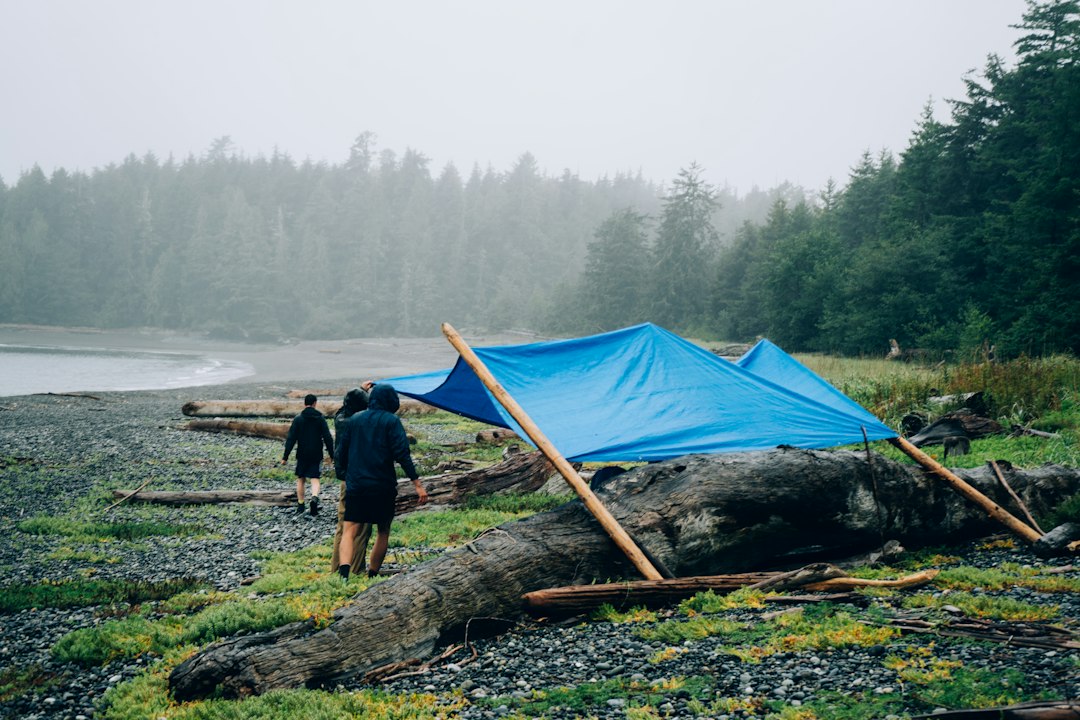
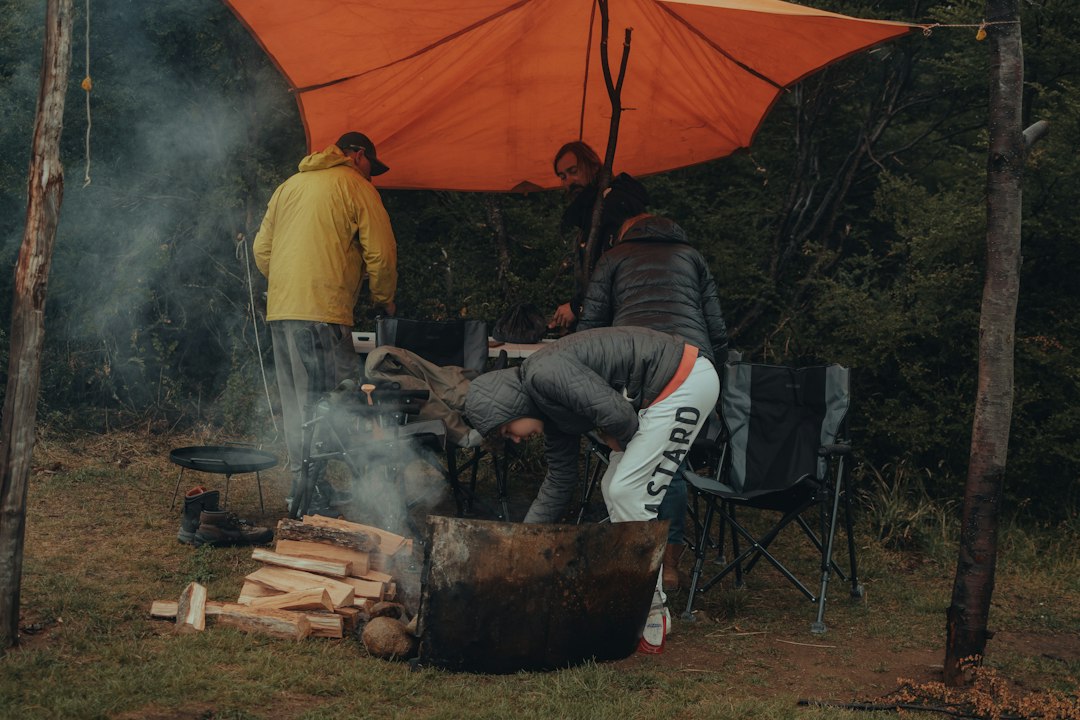
- Tarp over a ridge line: pitch low and steeper on the wind side so rain runs away from your fire area.
- Lean-to with a log or backpack as the back support to keep a work pocket dry.
- Use natural overhangs—rock ledges, dense evergreen boughs or fallen logs—to keep sparks and tinder dry while you build.
Place the tinder bundle inside and build your initial kindling so it’s under the shelter line; larger logs can sit outside where they’ll dry from the fire’s heat.
Ignition tools: why a ferro rod is often best in rain
In damp environments a ferro rod consistently wins because its sparks reach temperatures above 5,000°F and can penetrate dense tinder nests. Lighters are convenient but can fail when soaked or cold. Matches are fine in calm conditions if you use windproof, waterproof varieties and keep them dry.
Technique tips for a ferro rod:
- Hold the scraper close to the tinder (1–2 cm) and strike at a downward angle to direct sparks into the bundle.
- Pre-shave a fluffy nest: wood shavings, tinder fibers and char cloth or cotton can catch a spark more reliably.
- Practice short, aggressive strikes—you get the best sparks when you scrape the rod sharply rather than rub slowly.
Fuel strategy: from ember to sustained flame
Wet-fire success is about staged fuel: small, very dry material first, then slightly larger fuel to grow heat, then full-size logs. Concrete sequence:
- Tinder nest (char cloth, fine shavings, birch bark, waxed tab).
- Feather sticks and twigs ¼–½ inch in diameter—split a stick and shave curls to create high-surface-area kindling.
- Small split sticks ¾–1½ inches to establish coals.
- Larger split logs placed carefully so airflow stays consistent.
Split wood is critical: the inside of a log often remains dry even when the surface is wet. Carry a small hatchet or folding saw to split and expose dry heartwood.
Safety and environmental considerations
Wet or windy conditions increase the chance of sparks traveling—keep the fire contained and small. Use a fire pan or existing fire ring where required. Have water, a shovel and a way to smother embers ready. When leaving, drown, stir and touch embers to ensure the fire is fully out; damp conditions can conceal hot coals under ash.
When to rely on gear instead of improvising
If you need a guaranteed heat source—for emergencies, cooking or warmth—carry at least one reliable manufactured starter. A ferro rod plus waterproof tinder is compact and dependable. For comfort cooking, a small portable stove or a contained fire pit can be faster and leave less impact.
Further practice and resources
Practice these techniques at home where you can safely test tools and different tinder types. For broader skills that include shelter and resource selection, our Survival & Bushcraft guide covers extended wilderness tactics and packing lists.

Explore the Survival & Bushcraft guide
- Pitch a tarp or lean-to before collecting tinder.
- Gather inner bark, fatwood, and split wood—store in a dry bag.
- Carry a ferro rod and at least one waterproof tinder option.
- Practice feather sticks and splitting techniques at home.
- Keep fire size small and have water/shovel ready.
With a simple shelter, prioritized dry tinder, a high-temperature ignition source and a staged fuel strategy (tinder → kindling → logs), most fires can be started reliably in wet conditions. Pack a ferro rod and a small supply of waterproof tinder for the highest margin of success.
Can you start a fire with soaked wood?
Yes—by splitting logs to access dry heartwood and using high-heat sparks plus dry tinder, you can get a fire going even when outer surfaces are wet.
Is a ferro rod necessary in rain?
It's not strictly necessary, but a ferro rod is highly reliable in wet and cold conditions because it produces extremely hot sparks that ignite dense tinder more easily than matches or ordinary lighters.
What are the best lightweight waterproof tinder options?
Waxed cotton tinder tabs, commercial waterproof starter blocks, and small sealed bags of char cloth or cotton balls saturated with petroleum jelly are compact and effective choices.
How do you protect a fire from wind and rain without a tarp?
Use natural shelters like rock overhangs or dense evergreen boughs, build a low lean-to windbreak with logs, and position the fire so smoke and heat help dry incoming fuel without blowing sparks into vegetation.