Quick practical answer: what "hookups" mean and what you actually need
If someone says a site has “full hookups,” they mean three services: shore power (electric), potable fresh water, and a sewer connection. Each service has a few common variants—most importantly 30 amp vs 50 amp power and the way sewer hookups accept your hose. For first-time RV travelers, the basic checklist is: plug in safely, hook to a clean water source with a pressure regulator, and attach your sewer hose securely while keeping the connection sanitary.
Electric hookups: how to tell 30 amp from 50 amp and what to bring
Campground pedestals usually have clearly labeled outlets. 30 amp is a single-phase round or “A” shaped connector common on smaller RVs; 50 amp is two 50A poles that supply more power for larger rigs with multiple AC units, electric heaters or residential-style appliances. If your RV has a 30 amp inlet and the site is 50 amp, you’ll need a 50-to-30 amp adapter; the reverse (30 amp site for a 50 amp RV) will limit what you can run and may trip breakers.
- Bring: shore power cord (the right length), one high-quality adapter if your rig needs it, and a portable surge protector or electrical management system (EMS) to guard against bad wiring or unsafe voltage.
- Tip: inspect the pedestal before plugging in—look for frayed wires, burn marks, or loose outlets. If anything looks suspect, alert the host and request a different site.
Fresh water hookups: keeping water clean and protecting fittings
Fresh water means a potable spigot you connect to your RV’s city-water inlet. Use a dedicated drinking-water hose (not garden hose), and always install a water pressure regulator between the spigot and your hose—campground pressure can exceed what your RV’s plumbing tolerates. Some rigs prefer to use onboard tanks and fill periodically; for extended stays, city connection is more convenient.
- Bring: a white potable water hose, an inline pressure regulator rated around 40–60 psi, and a threaded spigot adapter if the campground uses nonstandard fittings.
- Sanitation: keep hose ends capped and flush the system if a campsite’s water tastes or smells off. Consider a small RV water filter if you frequently boondock or travel in areas with questionable supply.
Sewer hookups: the common types and how to avoid a mess
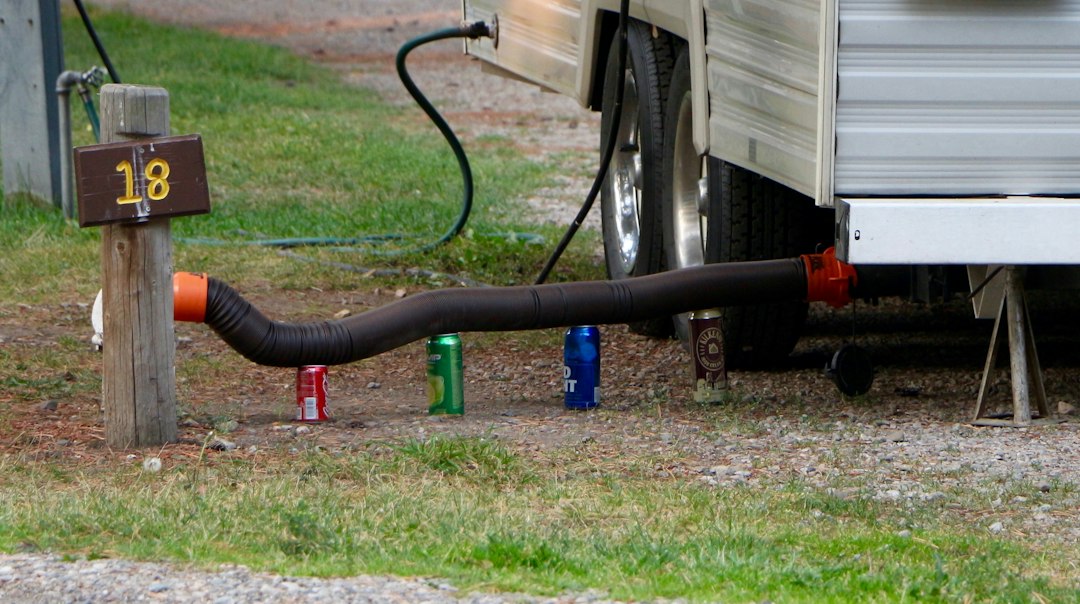
Sewer hookups normally provide a short standpipe or drop-in fitting at the site where you attach a sewer hose from your RV’s waste outlet. Colors and heights vary; some sites use an elevated box, others a ground-level inlet. The basic process is: close valves, attach hose to your RV, lead hose to sewer, then open gray (sink/shower) first to dilute and finally black (toilet).
- Bring: a heavy-duty flexible sewer hose, correct threaded fittings or adapters for the campground connection, and a support or ramp to level the hose so waste drains downhill without kinks.
- Tip: keep a removable elbow or elbow adapter and a short hand-held brush for terminal cleaning. Use disposable gloves and a spray bottle with a mild sanitizer for fittings when disconnecting.
Choosing adapters and extras that make hookups reliable
Adapters and accessories save frustration: an RV water pressure regulator, a quality surge protector/EMS, the right shore power cord length (25–50 ft depending on site spacing), and a robust sewer hose assembly with threaded connectors are core items. Also consider blind-spot extras like a sewer support kit (to create a downward grade), a 12V-to-120V converter if boondocking, and a set of spare fuses for the electrical bay.
Safety and etiquette at hookup sites
Safety is both personal and communal. Never leave electrical connections exposed to standing water; if a pedestal is wet after rain, ask for a different site. Use surge protection and confirm your ground is showing properly (many EMS units indicate wiring faults). For sewer etiquette, keep the connection covered, minimize hose exposure in public areas, and never drain black water into anything but the designated sewer inlet.
- Respect site sizes—don’t extend hoses or cords across another site without permission.
- When in doubt, ask the host. They can point out site quirks like low water pressure, occasional power trips, or shared sewer boxes.
Common hookup problems and simple fixes
- Power trips when AC turns on: try a lower-draw setting, move items off a single circuit, or request a 50 amp site if you regularly run multiple appliances.
- Low water flow: check the regulator, clear any kinked hose, and inspect your RV inlet screen if present.
- Sewer backups or leaks: confirm seals, tighten threaded connectors, and use a support to prevent reverse slope toward your RV.
When to skip hookups and when they’re nonnegotiable
Hookups are optional if you plan to boondock or dry camp for a night or two and have sufficient fresh water and battery capacity. They become nonnegotiable for long stays, hot-weather travel (AC), or when your itinerary requires frequent laundry and showering. Renting or towing a travel trailer? Plan hookups to match your rig’s service needs—don’t assume every site has a specific outlet until you book or arrive.
Where to learn more and quick resources
If you want deeper help living on the road (system maintenance, power budgets, gray/black tank care), our longer guide on RV and van life covers those topics in detail: RV & Van Life: The Complete Guide to Living and Traveling on the Road in Comfort. For gear grouped by trip type, see our Travel & Hiking Essentials collection.
- Confirm site services (30A/50A, water, sewer) when booking
- Pack potable hose, pressure regulator, shore power cord, surge protector/EMS
- Bring a flexible sewer hose, elbow/adapter and support ramps
- Inspect pedestals and spigots before connecting
- Carry disposable gloves, sanitizer spray and spare electrical fuses
Understand the three hookup services—electric, water and sewer—so you can match your rig’s needs to a campsite, bring the right adapters and protect your systems with a regulator and surge protection. A little inspection and the right accessories prevent most hookup headaches for first-time RV travelers.
What’s the difference between 30 amp and 50 amp hookups?
30 amp supplies a single 120V circuit suitable for smaller rigs; 50 amp provides two 120V legs (up to 50A each) for larger RVs with higher electrical loads. Use an adapter if needed, but be mindful of power limits.
Do I need a water pressure regulator?
Yes—campground water pressure can exceed what RV plumbing is rated for. A regulator prevents leaks and damaged fittings.
How do I avoid sewer smell when disconnecting?
Close valves, rinse with gray water first, use gloves and sanitizer, and keep threaded fittings tight; clean both ends before storage.
Can I use a regular garden hose for RV water?
No—use a white potable hose specifically rated for drinking water to avoid chemical leaching and contamination.
What should I do if the electrical pedestal sparks or smells?
Unplug immediately, move away, notify campground staff, and request another site. Don’t attempt repairs yourself.